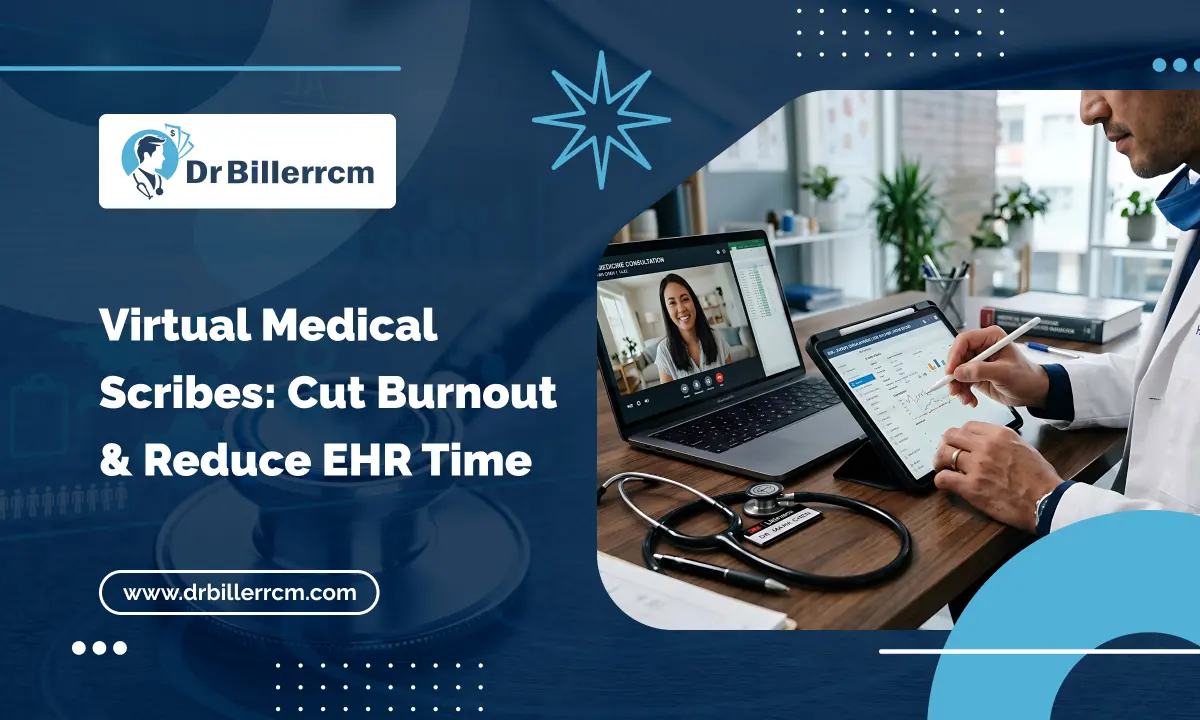
A patient visit may end in 20 minutes, but the physician’s work often does not. Completing EHR notes, reviewing charts, and closing documentation after clinic hours can create “pajama time” and add to administrative fatigue. This raises a practical question: Can virtual medical scribes actually give physicians two hours back each day?
A JAMA multisite study published in April 2026 found that across five academic medical centers, AI-scribe adoption was associated with 13.4 fewer minutes of total EHR time, 16.0 fewer minutes of documentation time, and also a 0.49-minute increase in weekly visit time. The impacts were greater among primary care physicians, advanced practice clinicians, female clinicians, and those who used AI scribes for at least half of their encounters.
This guide explains how virtual medical scribes can reduce EHR documentation time, what research says about physician workload and “pajama time,” how much time may realistically be recovered, and what practices should measure before deciding whether this approach fits their workflow.
Why EHR Documentation Is Driving Physician “Pajama Time”
EHR work can continue long after the last patient leaves, with unfinished notes, chart review, and other documentation pushing clinical work into evenings. Current AMA data show that 41.9% of physicians reported at least one burnout symptom in 2025, based on nearly 19,000 responses from 38 states and 106 health systems.
For practices that need broader support beyond documentation, medical billing services can also help reduce the administrative workload associated with revenue cycle tasks.
What Is Physician Pajama Time?
“Pajama time” refers to EHR and documentation work completed outside scheduled clinical hours. A physician may finish patient visits on time but still spend the evening completing notes, reviewing charts, responding to messages, or closing outstanding documentation.
Virtual medical scribes can help with workload by completing paperwork right after or during the meeting. AMA research using a virtual scribe reduced overall EHR time from 35.1 to 29.5 minutes per consultation, representing a 16% reduction. Pajama time decreased by around one minute per appointment throughout the entire research group.
Documentation, like workload, staffing, administrative commitments, and other practice factors, contributes to physician burnout.
A scribe can handle a lot of the note-taking, while the physician remains in control of reviewing and approving the record. For physicians, the cumulative effect of small documentation tasks can quickly add up to quite a bit of work by the end of the day.
Documentation Can Crowd Out Other EHR Work
Heavy documentation can also compete with other useful EHR activities. A 2024 Health Affairs study found that each additional hour primary care physicians spent documenting was associated with a 7.1% reduction in the proportion of patients for whom they viewed an outside record that day.
This matters for practice workflow because reducing documentation time is not simply about finishing charts faster. Recovered time may allow physicians to review relevant records, communicate with patients, complete clinical tasks, or finish work during scheduled hours instead of carrying it into the evening. However, a virtual medical scribe should be viewed as one workflow intervention, not a complete solution for physician burnout.
Practices also need accurate documentation for downstream medical coding services, billing, claims submission, and reimbursement processes.
What Is a Virtual Medical Scribe?
A virtual medical scribe remotely supports clinical documentation while the physician conducts the patient encounter. The goal is to reduce EHR documentation time without transferring clinical responsibility from the provider.
A virtual scribe listens to the patient encounter through an approved, secure setup and prepares clinical documentation for the physician to review. Depending on the workflow, the scribe may:
- Record the history, examination findings, assessment, and plan
- Enter or prepare information in the EHR
- Organize notes using the practice’s documentation format
- Prepare draft follow-up or referral information
- Help reduce after-hours charting
For practices using different EHR platforms, understanding how documentation interacts with systems such as eClinicalWorks and athenahealth can also be important when evaluating a virtual documentation workflow.
Real-Time vs. Asynchronous Virtual Scribes
Real-time scribes record the meeting when it occurs, allowing the doctor to complete more of the note during the visit.
| Factor | Real-Time Virtual Scribes | Asynchronous Virtual Scribes |
| Working Method | Document the encounter while the physician interacts with the patient. | Prepare documentation after the patient encounter. |
| Documentation Speed | Supports immediate or near-immediate note preparation. | Notes are completed after the encounter and may take additional time. |
| Physician Benefit | Reduces typing during visits and supports direct patient interaction. | Reduces the time spent preparing notes after appointments. |
| Best For | Busy clinics requiring quick documentation turnaround. | Practices that prefer flexible, post-visit documentation. |
| Potential Limitation | Requires reliable live communication and secure EHR access. | Notes may be available later, requiring physician review before approval. |
| Common Outcome | Can help reduce in-visit documentation workload. | Can help reduce after-hours charting and note-preparation time. |
Human Virtual Scribes vs. AI-Assisted Scribing
The practical question is not whether a scribe removes every documentation task. It is whether the workflow reduces EHR Documentation Time enough to give physicians meaningful time back during the workday.
| Factor | Human Virtual Scribes | AI-Assisted Scribing |
| How It Works | A trained professional prepares clinical documentation remotely. | AI processes encounter audio or text and generates a draft note. |
| Documentation Support | Can interpret the encounter and follow the physician’s preferred documentation format. | Produces structured notes using speech recognition and language-processing tools. |
| Physician Interaction | May support real-time communication with the physician during the visit. | Usually requires physician review after the AI generates the note. |
| Effect on EHR Workload | Reduces manual note preparation and typing. | Reduces drafting time and repetitive documentation tasks. |
| Potential Risks | Misheard information, documentation errors, and privacy concerns. | Transcription errors, missing clinical context, inaccurate summaries, and privacy risks. |
| Best Fit | Practices requiring human judgment and ongoing documentation support. | Practices seeking technology-assisted drafting with appropriate clinical oversight. |
Can Virtual Medical Scribes Really Save 2 Hours a Day?
Virtual Medical Scribes can minimize documentation time. However, saving two hours every day is not normal. The real gain is dependent on visit volume, specialty, EHR workflow, scribe model, and physician review time.
What the AMA Research Found
An AMA-reported study examined 144 physicians across 152 virtual-scribe participation episodes. Total EHR time fell from 35.1 to 29.5 minutes per appointment, a 16% reduction. Note-writing time decreased by about 1.3 minutes per appointment, while pajama time fell by about one minute.
The results also differed by specialty. Medical specialties had a larger reduction in total EHR time than primary care, while the change for surgical specialties was not statistically significant.
How Per-Visit Savings Add Up
Small reductions can become meaningful across a full clinic schedule. For example, a physician who saves 5 minutes across 20 encounters recovers about 100 minutes of EHR time.
That recovered time could be used to finish notes during scheduled hours, review records, communicate with patients, or handle other clinical work. It does not automatically mean more appointments.
Why Two Hours Is Not a Guaranteed Result
A Virtual Medical Scribe may reduce EHR Documentation Burden, but results vary. Patient volume, documentation requirements, specialty, EHR usability, and correction time all matter.
For this reason, practices should measure:
- EHR minutes per encounter
- After-hours charting
- Note completion time
- Correction or editing time
- Encounters completed per day
A 1-2 hour recovery may be feasible in particular workflows, but it should be assessed rather than assured.
How Virtual Medical Scribes Reduce After-Hours Charting
After-hours charting often begins with small unfinished tasks that accumulate across a full clinic day. Virtual Medical Scribes can shift much of the note-preparation work into or shortly after the patient encounter, giving physicians a better chance to finish documentation during scheduled hours.
Completing Notes During or Soon After Visits
With a real-time virtual scribe, documentation is prepared while the physician speaks with the patient. An asynchronous scribe can prepare the note shortly after the encounter.
The physician still reviews the record, corrects clinical details, and approves the final note. This division of work can reduce typing and note composition without transferring clinical responsibility.
AMA research found that virtual scribe use reduced physician note time by about 1.3 minutes per appointment and reduced overall pajama time by about 1 minute per appointment.
Reducing Evening and Weekend Charting
The goal is not simply faster note completion. It is reducing the amount of EHR work that remains after clinic hours.
A physician who closes more notes during the workday may have fewer unfinished charts waiting at night. This can also reduce weekend documentation for practices where chart work regularly carries over.
Creating a More Predictable End to the Clinical Day
A completed note queue can make the end of the clinical day more predictable. Physicians may use recovered time for chart review, patient communication, orders, or other clinical responsibilities.
However, Virtual Medical Scribe Services do not eliminate every source of pajama time. Portal messages, inbox work, chart review, and administrative tasks can continue after hours. AMA guidance also recognizes that reducing EHR burden requires broader workflow changes.
How Virtual Scribes Improve Patient-Provider Interaction
EHR documentation burden could take a physician’s attention away from the person in front of them. Virtual Medical Scribes can handle much of the documentation during the encounter.
Less Typing During the Visit
Typing while taking a history, discussing symptoms, or explaining treatment can divide the physician’s attention. A virtual scribe can prepare the clinical note while the physician concentrates on the encounter.
The physician can then review and approve the documentation rather than building every part of the note during the visit.
More Eye Contact and Conversation
A physician who spends less time looking at an EHR screen may have more opportunity for direct eye contact and natural conversation. This can make it easier to notice patient questions, concerns, and nonverbal responses.
Virtual Medical Scribes can also avoid having another person physically present in the examination room. For some patients, speaking directly with the physician without an in-room scribe may feel more private and comfortable.
According to AMA research, 60% of views are based on a direct assessment of patient outcomes. However, this reflects physician views rather than a direct evaluation of patient outcomes.
Better Focus on the Patient
Less documentation during the interaction allows clinicians to focus on listening, examination, teaching, and joint decision-making.
The benefit is greatest when the scribe fits the clinical workflow. Physicians still need to verify the note, correct errors, and confirm that the final record accurately reflects the encounter.
Conclusion
Virtual Medical Scribes can help physicians reduce EHR Documentation Burden, limit after-hours charting, and focus more on patient care. However, actual time savings depend on clinical workflow, specialty, documentation needs, and physician review.
A successful scribe workflow should be judged on note completion time, after-hours EHR utilization, documentation accuracy, and patient-care capacity. By examining these criteria, practices can assess whether Virtual Medical Scribe Services reduce administrative stress and support more sustainable clinical work.
FAQs
Can virtual medical scribes really save physicians two hours a day?
Virtual medical scribes may reduce documentation time. Two hours per day is not guaranteed. Results can be determined by patient volume, specialty, EHR workflow, scribe type, and physician review time.
2. How do virtual medical scribes reduce physician burnout?
They can reduce repetitive note preparation, typing, and after-hours charting. This may help physicians spend more time on patient care and reduce administrative fatigue.
What is the difference between real-time and asynchronous virtual scribes?
Real-time scribes prepare documentation during the patient encounter. Asynchronous scribes prepare notes after the visit using encounter details or recordings. Both require physician review and approval.
Can virtual medical scribes improve patient-provider interaction?
Yes. By reducing typing during visits, scribes may allow physicians to maintain more eye contact and focus on patient questions. The actual benefit depends on the clinical workflow and patient preferences.
Can virtual medical scribes help medical billing and coding?
Virtual scribes can prepare organized documentation that supports coding and billing review. However, physicians must verify clinical accuracy, and qualified billing or coding professionals should confirm the appropriate CPT, HCPCS, and ICD-10-CM codes.