
CO 45 Denial Code: What It Means and How to Post It
The CO 45 denial code means the charge was higher than the payer’s allowed amount. Learn how to post it, how it differs from PR-45 and when to dispute it.

The CO 45 denial code means the charge was higher than the payer’s allowed amount. Learn how to post it, how it differs from PR-45 and when to dispute it.

Quick answer: The most costly coding mistakes in pathology billing are counting slides or jars instead of specimens, picking the wrong 88300 to 88309 level,
How to run an internal billing audit before a RAC review: RAC and TPE stages, OIG Work Plan targets, medical necessity documentation, error rates and extrapolation risk.
ASC vs. HOPD billing: claim forms, the ASC Covered Procedures List, device-intensive and pass-through C-codes, modifiers 73, 74 and SG, and UB-04 rules.

NICU billing guide: 99468/99469 critical care vs 99477–99480 intensive care, weight-based coding, critical care timestamps and revenue codes 0173 and 0174.
How to run a payer contract audit: build an expected fee schedule, reconcile 835 ERA lines, find contractual allowance discrepancies and recover underpayments.
How to bill CPT 88342, 88341 and 88344 immunohistochemistry: per-specimen units, quantitative codes, modifiers and denial fixes.

ICD-10 codes for lipid panel screening and diagnosis, Z13.220 vs Z13.6, Medicare five-year rule and CPT 80061 billing tips.
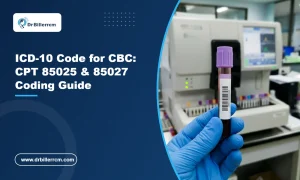
ICD-10 codes that support a complete blood count, CPT 85025 vs 85027, Medicare blood count rules and how to prevent CBC denials.

ICD-10 codes for screening and routine lab work, screening vs diagnostic coding, and the Medicare screening rules that prevent lab denials.

Which ICD-10 codes support a comprehensive metabolic panel (CPT 80053), when to use screening codes, Medicare rules and how to prevent CMP denials.
Nurse practitioner billing and coding comes down to one decision that many practices make on autopilot: whose NPI goes on the claim. That choice sets
Medical billing for urologist practices rarely fails on rare procedures. Instead, the same few patterns repeat every week. A diagnostic cystoscopy gets folded into the
Medical billing in New York runs on clocks that state law sets, not payer workload. Commercial insurers and HMOs must pay a clean electronic claim

Orthopedic coding challenges cluster in three areas. First, the global surgical package already pays for a lot of follow-up care. Second, NCCI edits bundle many

ABA therapy billing guidelines come down to four checks on every claim. First, pick the adaptive behavior CPT code that matches who delivered the service.

Esophagogastroduodenoscopy (EGD) CPT codes describe flexible scopes passed through the mouth into the esophagus, stomach and duodenum. The core codes run from 43233 to 43259,

Are NPI registry errors or crossed CAQH profiles delaying provider enrollment or creating billing problems? An incorrect practice address, mismatched provider name, or outdated enrollment